Microsoft Stock (MSFT) Hits $513: Azure Surpasses $100 Billion as AI Boom Accelerates
Published: August 29, 2026 | Reading Time: 8 min | Market Analysis
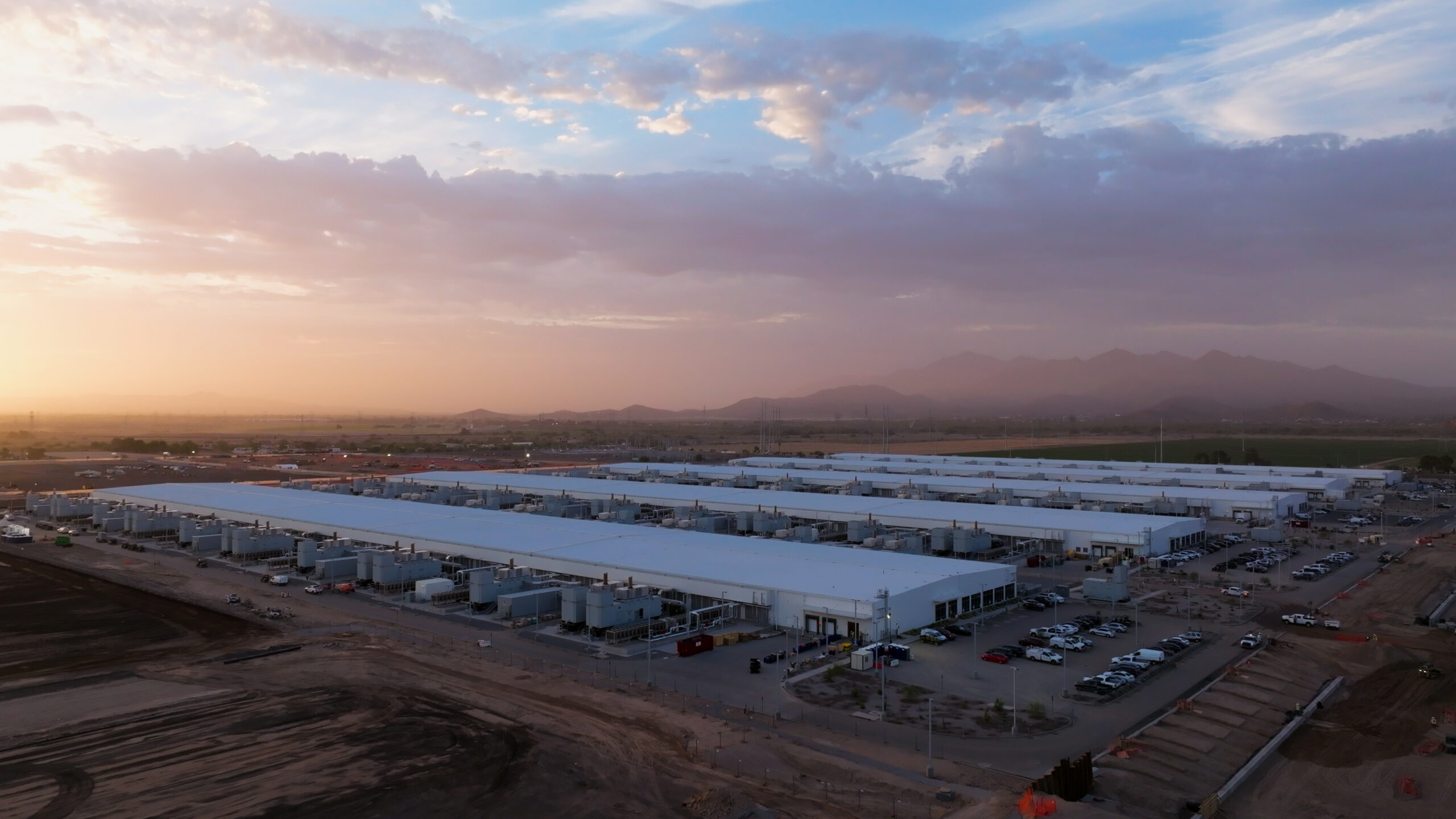
Microsoft is proving why it remains the gold standard in big tech. With shares climbing to $513.53 on Thursday, August 28 — a gain of $8.47 (+1.68%) — the Redmond giant is riding a wave of AI-fueled momentum that shows no signs of slowing. For the millions of American investors holding MSFT in their 401(k)s, brokerage accounts, and index funds, the latest earnings report was a masterclass in how to dominate the most important technology shift of the decade.
When Microsoft reported its fiscal fourth-quarter results on July 29, 2026, the numbers were nothing short of extraordinary. Revenue hit $90 billion. Earnings per share reached $4.81. Azure revenue grew 43%. And for the first time ever, the cloud platform's annual revenue surpassed the $100 billion milestone. Yet despite the blowout quarter, the stock has traded in a relatively tight range since the report — leaving investors wondering whether MSFT at $513 is a launching pad for new highs or a ceiling before the next pullback.
Q4 FY2026 Earnings: A Record-Breaking Quarter
Microsoft's fiscal fourth quarter, which ended June 30, 2026, was one for the history books. The company reported revenue of $90.0 billion, up 18% year-over-year and well ahead of the $87.42 billion analysts had expected. Operating income climbed 18% to $40.6 billion, while net income surged 31% on a GAAP basis to $35.8 billion.
The headline number that grabbed Wall Street's attention was diluted earnings per share of $4.81, up 32% from the year-ago period. Even after adjusting for a $3.2 billion gain from Microsoft's investment in Anthropic and other one-time items, non-GAAP EPS came in at $4.74 — a 23% increase that handily beat consensus estimates of roughly $4.21.
CEO Satya Nadella summed up the quarter with characteristic confidence. "We are advancing the frontier on the cost-to-outcome curve, ensuring every customer can turn tokens into business results," he said on the earnings call. "This year, Azure revenue surpassed $100 billion for the first time, and Microsoft 365 Copilot reached over 30 million paid seats, reflecting the confidence customers are placing in us to power their AI transformation."
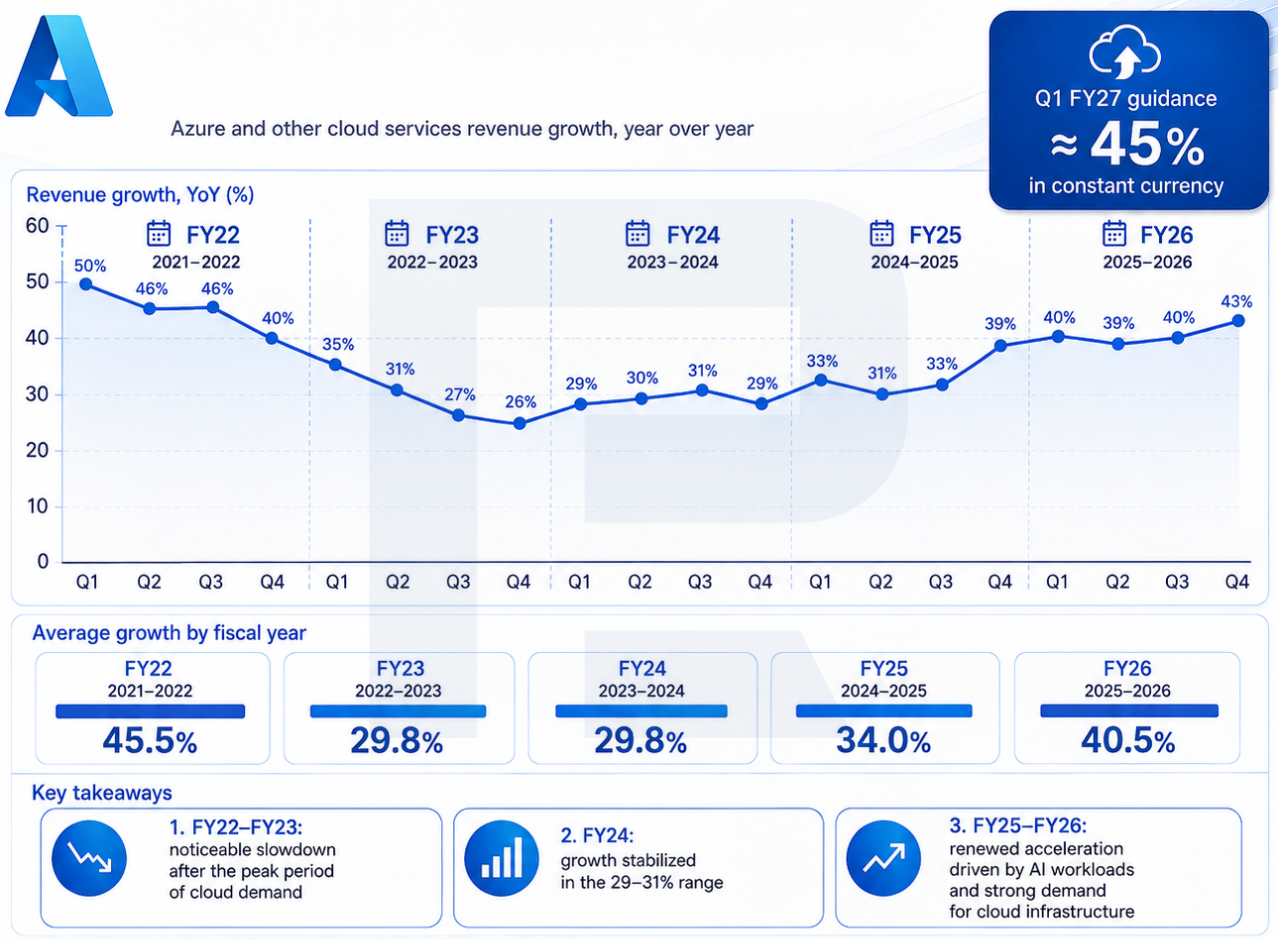
CFO Amy Hood added that the company "delivered a strong quarter to close out the fiscal year, highlighted by Microsoft Cloud revenue of $59.3 billion, up 27% year-over-year." The full fiscal year 2026 was equally impressive, with total revenue reaching $331.8 billion (up 18%), operating income hitting $155.2 billion (up 21%), and diluted EPS climbing to $17.95 (up 32%).
Azure Crosses $100 Billion: The Cloud Crown Jewel
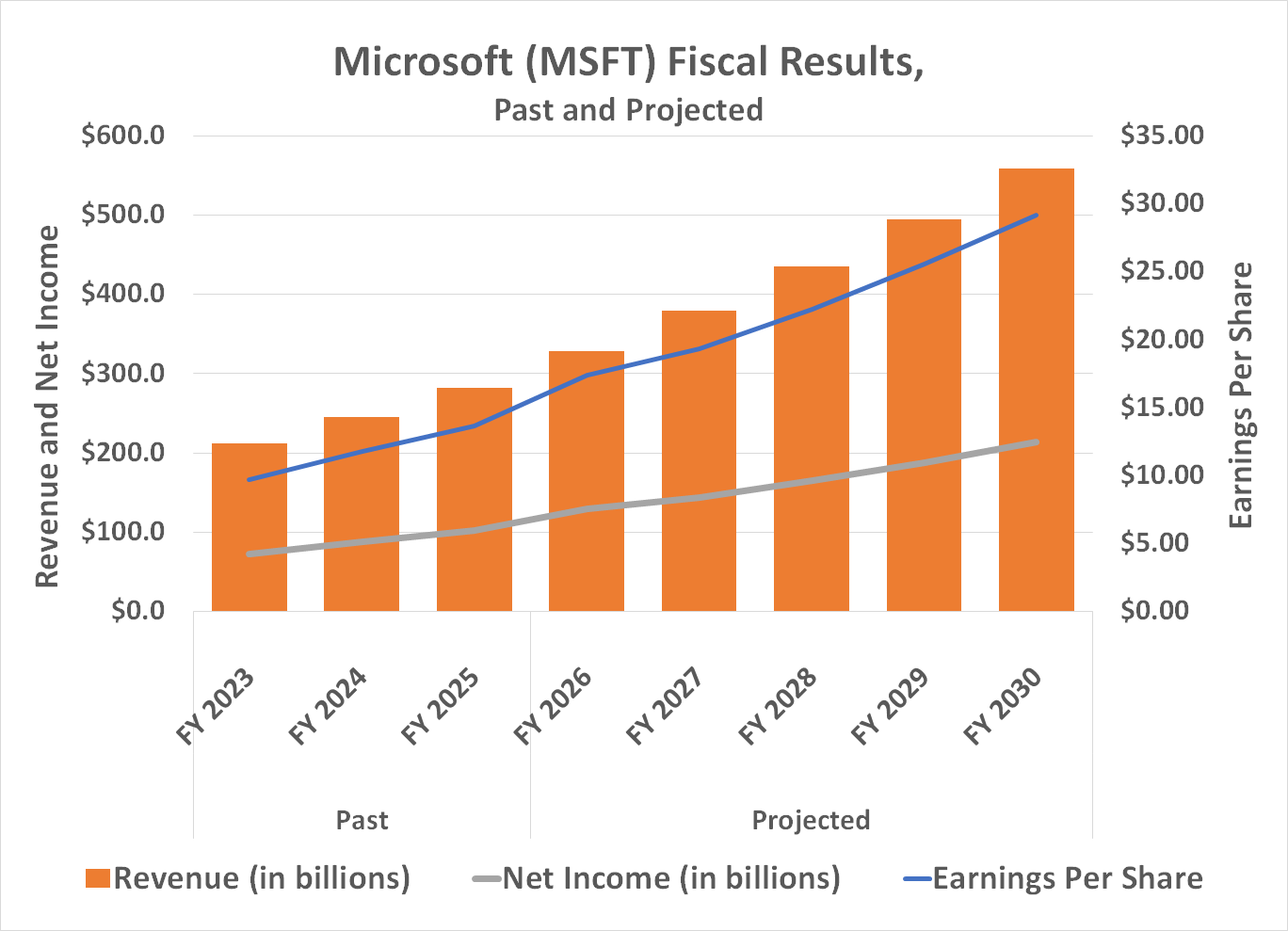
The most significant milestone from Microsoft's Q4 report was Azure officially becoming a $100 billion annual revenue business for the first time in the company's history. Azure and other cloud services revenue grew 43% in the quarter, accelerating from already robust levels and demonstrating that demand for cloud computing and AI infrastructure continues to outpace supply.
The Intelligent Cloud segment — which houses Azure — generated $39.3 billion in revenue, up 32% year-over-year. What makes this growth particularly impressive is that it comes against a prior-year comparable that included accelerating growth, meaning Microsoft is compounding on top of already-strong numbers.
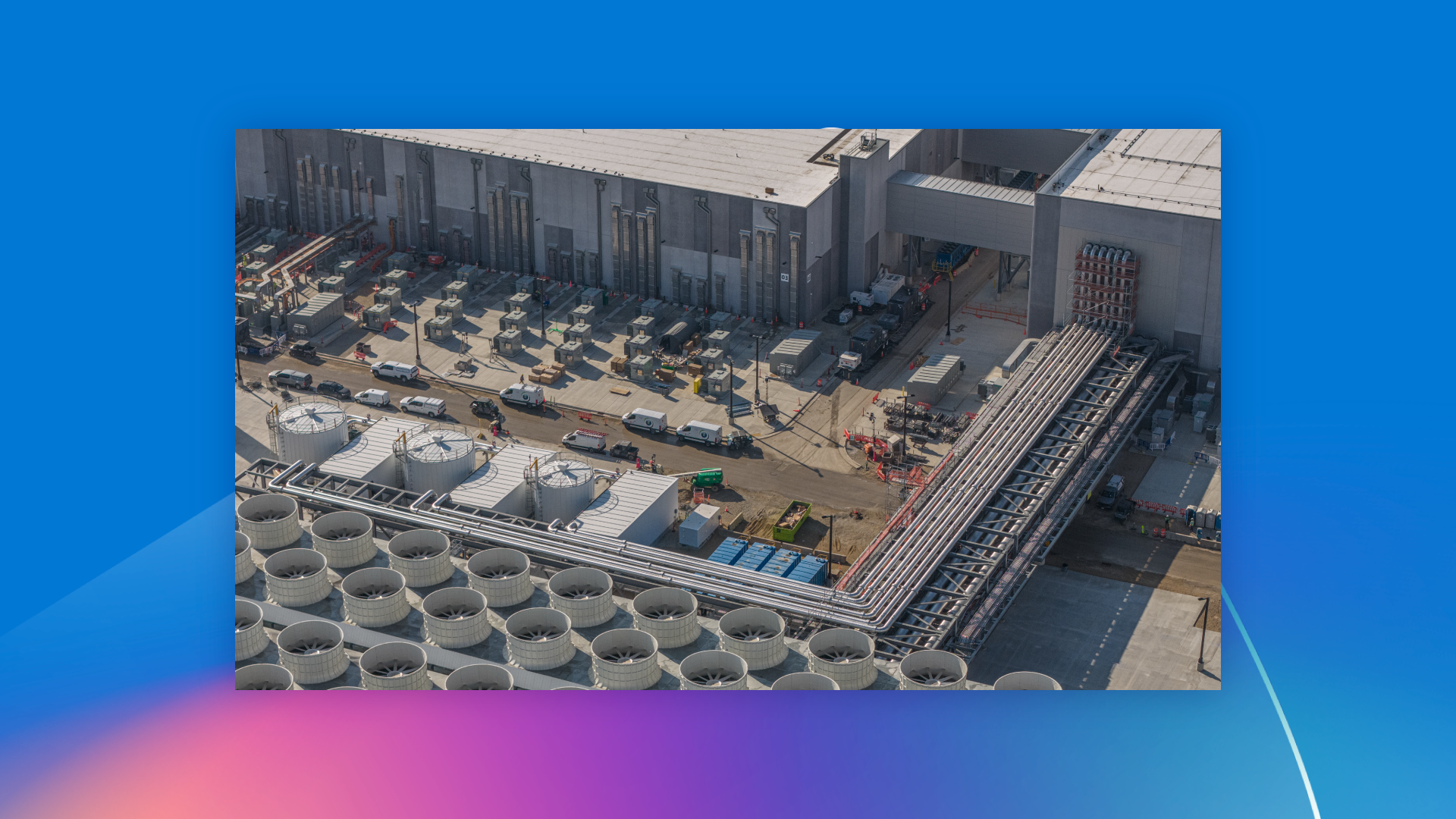
Customer demand continues to exceed available capacity. In response, Microsoft is building data centers at a pace that would have seemed impossible just a few years ago. The company added 31 new datacenters across 5 continents in Q4 alone, bringing the fiscal year total to 88 new facilities. Nadella revealed that Microsoft has "reduced dock-to-live times for new GPUs in our largest regions by nearly 50%" and added another gigawatt of capacity in the quarter. The company remains on track to roughly double its overall capacity in just two years.
Commercial remaining performance obligation — essentially contracted future revenue — surged 84% to a staggering $678 billion. That figure represents an enormous backlog of guaranteed future income that provides unparalleled revenue visibility. Roughly 30% of that RPO will be recognized in the next 12 months, up 37% year-over-year, while the portion recognized beyond the next 12 months increased an eye-popping 112%.
Copilot and AI: 30 Million Seats and Counting
While Azure provides the infrastructure backbone, Microsoft's AI applications are quickly becoming the growth engine that Wall Street is most excited about. Microsoft 365 Copilot — the company's flagship AI assistant embedded across Office, Teams, and Outlook — reached a major milestone in Q4, surpassing 30 million paid seats.
Net paid seat additions more than doubled sequentially from Q3, driven by strong enterprise adoption and the May 1 general availability of Microsoft 365 E7, the premium tier that bundles advanced AI capabilities. The company also introduced a new three-year Copilot purchasing option through its Cloud Solution Provider program, making it easier for large enterprises to commit long-term.
The Productivity and Business Processes segment, which includes Office, LinkedIn, and Dynamics, generated $37.8 billion in Q4 revenue, up 14% year-over-year. Microsoft 365 Commercial cloud revenue increased 16% on an adjusted basis, while consumer cloud revenue surged 24%. LinkedIn revenue grew 12%, and Dynamics 365 revenue climbed 13%.
Perhaps most importantly, Microsoft is seeing ARPU (average revenue per user) expansion across its customer base. Premium offerings including Copilot, E5, and the early traction in E7 are driving higher per-seat monetization. The company also rolled out usage-based billing for Copilot in July, which should further accelerate revenue as customers increase their AI consumption.
GitHub Copilot also had a standout quarter. Following a June business model change that aligned pricing with usage and value, consumption surged ahead of expectations. The developer-focused AI tool has become one of the fastest-growing products in Microsoft's portfolio.
The $50 Billion CapEx Bet: Building the AI Factory of the Future
Microsoft's ambition comes with a massive price tag. Capital expenditures in Q4 reached $41 billion, a staggering sum that reflects the company's all-in bet on AI infrastructure. CFO Amy Hood guided that Q1 FY2027 CapEx will exceed $50 billion, with the full fiscal year 2027 likely to see even higher spending.
Roughly two-thirds of that CapEx goes to short-lived assets — primarily CPUs and GPUs — as customers increasingly build solutions that leverage both AI and traditional cloud infrastructure. The remaining spend covers long-lived assets including massive data center campuses and fiber networks.
The scale of this buildout is unprecedented. In addition to the 88 data centers opened this fiscal year, Microsoft is extending the estimated useful lives of its datacenter and office buildings from 15 to 25 years, reflecting the long-term nature of these AI infrastructure investments. The company is also optimizing across silicon, systems, and software to get more from every dollar spent — for example, increasing Copilot workload throughput 4x since the start of the calendar year.
For investors, the key question is whether this massive spending will generate sufficient returns. So far, the answer appears to be yes. Microsoft Cloud gross margin percentage came in at 65% in Q4 — better than expected despite the heavy infrastructure investments. The company is managing to scale AI capacity while maintaining profitability, a balance that few competitors can match.
Guidance: Why Wall Street Is Still Bullish
Microsoft's forward guidance for fiscal Q1 2027 reinforced the bull case. The company expects total revenue between $89.85 billion and $90.95 billion, representing growth of 16% to 17% year-over-year. That is a remarkably strong guide for a company already generating nearly $100 billion per quarter.
Segment guidance was equally encouraging:
- Productivity and Business Processes: $36.7B - $37.0B (+11% to +12%)
- Intelligent Cloud: $40.95B - $41.25B (+33% to +34%)
- Azure growth: Approximately 45% in constant currency
- More Personal Computing: $12.2B - $12.7B
The 45% Azure growth guidance was particularly noteworthy. Despite comparisons getting tougher and capacity constraints remaining, Microsoft expects its cloud platform to accelerate. Management noted that even with the strong Q4 close, they "continue to expect H1 growth to accelerate" as new capacity comes online and efficiency gains compound.
Operating margins are expected to be "relatively flat year-over-year," a conservative guide that leaves room for upside if revenue outperforms and cost controls hold. The company also expects operating expense growth of just 7% to 8% — well below revenue growth, implying continued operating leverage.
Returning Cash to Shareholders: $43 Billion and Counting
While growth investors focus on Azure and AI, income-oriented shareholders have plenty to cheer about. Microsoft returned $10.2 billion to shareholders in Q4 alone through dividends and share repurchases, bringing the full fiscal year 2026 total to over $43 billion.
The stock currently pays a quarterly dividend of $0.91 per share, yielding approximately 0.72% at current prices. While that yield is modest, the dividend has grown consistently for years and is backed by one of the most reliable cash flow machines in corporate America. Free cash flow in Q4 was $19.6 billion, and cash flow from operations surged 30% to $55.4 billion.
With a balance sheet that holds tens of billions in cash and short-term investments, Microsoft has the financial firepower to continue raising dividends, buying back stock, and funding its massive CapEx program — all simultaneously. That is a luxury very few companies can afford.
Where MSFT Stands Now: Key Metrics
As of the August 28 close, here is the complete picture for Microsoft shareholders:
- Current Price: $513.53 (+1.68%)
- After-Hours: $513.06 (-0.09%)
- Previous Close: $505.06
- Day's Range: $504.87 - $517.78
- 52-Week Range: $349.20 - $553.72
- Market Cap: $3.81 Trillion
- P/E Ratio (TTM): 28.64
- EPS (TTM): $17.93
- Beta: 1.10
- Volume: 28.95 million
- Average Volume: 38.29 million
- Forward Dividend: $3.64 (0.72% yield)
- Analyst Price Target: $569.45 (average)
At a P/E of roughly 29x trailing earnings and approximately 24x forward earnings, Microsoft is trading at a premium to the broader market — but a discount to many of its hypergrowth AI peers. The stock is up approximately 47% from its 52-week low of $349.20 but remains about 7% below its all-time high of $553.72.
Wall Street Upgrades MSFT: Wells Fargo Sees $700
Analyst sentiment on Microsoft remains overwhelmingly positive. On August 12, 2026, Wells Fargo analyst Andrew Lange maintained an Overweight rating on the stock and raised his price target from $650 to $700 — one of the highest targets on Wall Street. The upgrade reflects confidence that Microsoft's AI monetization is accelerating faster than previously expected.
The consensus among covering analysts breaks down as follows:
- Strong Buy / Buy: 85%
- Hold: 15%
- Sell / Underperform: 0%
The average analyst price target of $569.45 implies roughly 11% upside from current levels. If Wells Fargo's $700 target proves accurate, the stock could gain an additional 36% — a remarkable outlook for a company already valued at $3.8 trillion.
Technical Analysis: The Road to $553 and Beyond
From a technical standpoint, Microsoft stock is in a healthy uptrend. The 15-minute chart shows MSFT building a series of higher lows throughout late August, with the stock consistently finding support at its rising 50-period EMA. Key technical levels US traders are monitoring:
- Immediate Resistance: $517.78 (August 28 high) and $520 (psychological)
- Major Resistance: $553.72 (52-week high / all-time high)
- Support: $505 (previous close) and $500 (psychological floor)
- Breakdown Risk: Below $490 could trigger selling toward the 200-day moving average near $470
The MACD on the daily chart is showing signs of stabilization after a period of consolidation, while the stock's beta of 1.10 means it moves roughly in line with the broader market — significantly less volatile than high-beta tech names like Tesla or NVIDIA. For risk-averse investors, that lower volatility is a feature, not a bug.
Volume has been somewhat light at 28.95 million shares — below the 38.29 million average — suggesting that institutional accumulation may be ongoing but not yet explosive. A breakout above $520 on above-average volume would likely trigger a wave of algorithmic buying that could push MSFT toward its 52-week high.
Frequently Asked Questions
What is Microsoft's stock price today?
As of August 28, 2026, Microsoft (MSFT) closed at $513.53, up $8.47 (+1.68%). After-hours trading saw the stock at $513.06. The 52-week range is $349.20 to $553.72.
What were Microsoft's Q4 FY2026 earnings?
Microsoft reported revenue of $90.0 billion (up 18%), operating income of $40.6 billion, and diluted EPS of $4.81 (up 32%). Azure revenue grew 43%, and Microsoft Cloud revenue reached $59.3 billion (up 27%).
Did Azure really hit $100 billion in annual revenue?
Yes. For the first time, Azure's annual revenue surpassed $100 billion in fiscal year 2026. The cloud platform grew 43% in Q4, and management guided approximately 45% growth for Q1 FY2027.
How many Copilot paid seats does Microsoft have?
Microsoft 365 Copilot surpassed 30 million paid seats in Q4 FY2026. Net paid seat additions more than doubled sequentially from Q3.
Is Microsoft stock a buy at $513?
Wall Street is overwhelmingly bullish, with 85% of analysts rating MSFT a Buy and 0% recommending Sell. The average price target is $569.45, while Wells Fargo recently raised its target to $700. The stock trades at roughly 24x forward earnings.
When is Microsoft's next earnings report?
Microsoft is scheduled to report fiscal Q1 2027 earnings on October 28, 2026. Analysts expect continued strong growth driven by Azure and AI monetization.
Bottom Line for US Investors
Microsoft at $513 is not a cheap stock — but it is arguably one of the highest-quality businesses in the world. The company has managed to do what few others can: generate massive revenue growth while expanding margins, returning billions to shareholders, and investing aggressively in the future. Azure's crossing of the $100 billion threshold is not just a milestone — it is proof that the cloud and AI transition is still in its early innings.
For American investors, MSFT offers a rare combination of growth, stability, and income. The 0.72% dividend yield may not excite income hunters, but the 30% annualized cash flow growth and $43 billion in annual shareholder returns tell a different story. This is a company that is simultaneously a growth stock and a cash machine.
The risks are real — $50 billion in quarterly CapEx is an enormous bet, competition from Amazon Web Services and Google Cloud is fierce, and valuation multiples could compress if growth slows. But with a $678 billion backlog of contracted revenue, 30 million Copilot seats, and Azure guiding to 45% growth, the evidence suggests that Microsoft's best days are still ahead.
For long-term investors building wealth in taxable accounts, IRAs, and 401(k)s, Microsoft remains a cornerstone holding that deserves serious consideration at any price below its all-time highs.
Are you adding to your MSFT position or taking profits at $513? Share your strategy in the comments below.
Topics: Microsoft Stock MSFT, Microsoft Stock Price Today, MSFT Stock Analysis, Microsoft Earnings Q4 2026, Azure Revenue 100 Billion, Microsoft Copilot, Satya Nadella, Cloud Stocks, Tech Stocks, NASDAQ MSFT, AI Stocks, Investing


Comments
Post a Comment